
When a child is diagnosed with Autism Spectrum Disorder (ASD), ADHD, Global Developmental Delay (GDD), Dyslexia, or other special needs, much of the attention naturally shifts towards supporting the child.
- Therapy appointments.
- School meetings.
- Intervention plans.
- Medical consultations.
- Behavioural challenges.
- Academic concerns.
- Future planning.
Parents often become advocates, coordinators, caregivers, therapists, and emotional anchors all at once.
But amidst all these responsibilities, one important question is rarely asked:
Who is supporting the parent?
“I Thought I Was Coping Fine”
Many parents of children with special needs describe themselves as “coping”.
After all, they continue to attend appointments, manage daily routines, and support their child through challenges.
Yet beneath the surface, many are carrying significant emotional stress.
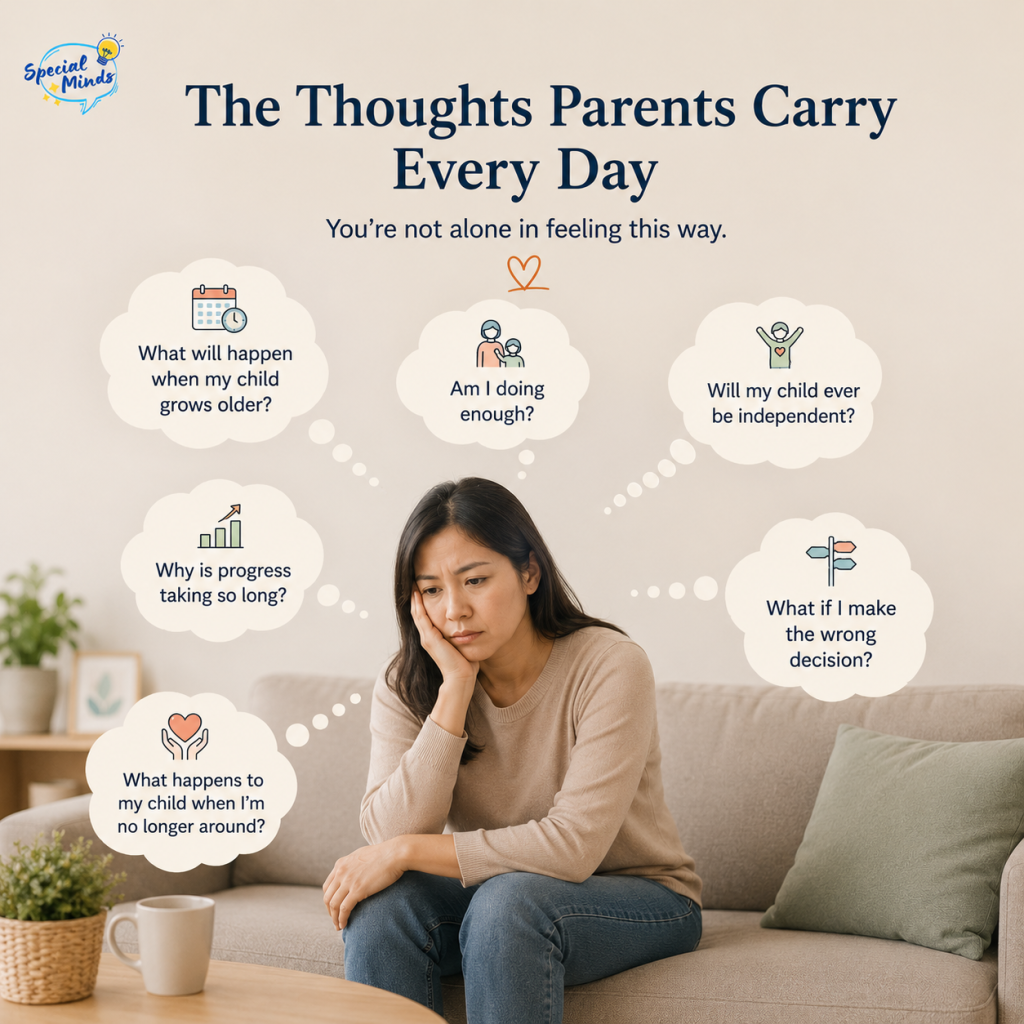
Over time, these worries can become a constant background noise that never truly switches off.
Many parents do not realise how exhausted they are until the stress begins affecting their sleep, relationships, physical health, or emotional well-being.
Signs of Caregiver Burnout
Caregiver burnout is a state of physical, mental, and emotional exhaustion that develops when a person spends prolonged periods caring for others without sufficient support.
Some common signs include:
- Constant Anxiety
You find yourself worrying about your child even during work, social gatherings, or before bed.
- Feeling Guilty When Resting
You struggle to enjoy personal time because you feel you should be doing more for your child.
- Emotional Exhaustion
You feel mentally drained, even after a full night’s sleep.
- Difficulty Switching Off
Your mind is always planning, anticipating problems, or thinking about the next appointment.
- Feeling Isolated
Friends and family may care, but they may not fully understand the unique challenges of raising a child with special needs.
- Increased Irritability
Small issues feel overwhelming, and you may notice yourself becoming more easily frustrated or emotionally reactive.
Why Parents Often Put Themselves Last
Parents naturally prioritise their children.
When a child has additional needs, this instinct often becomes even stronger.
Many parents believe:
- Their child’s needs are more important.
- Seeking support is selfish.
- They should be able to manage on their own.
- Other families seem to be coping better.
However, caring for yourself is not taking away from your child.
In fact, the wellbeing of a child is closely connected to the wellbeing of their caregivers.
A parent who feels supported, emotionally regulated, and less overwhelmed is often better able to support their child through everyday challenges.
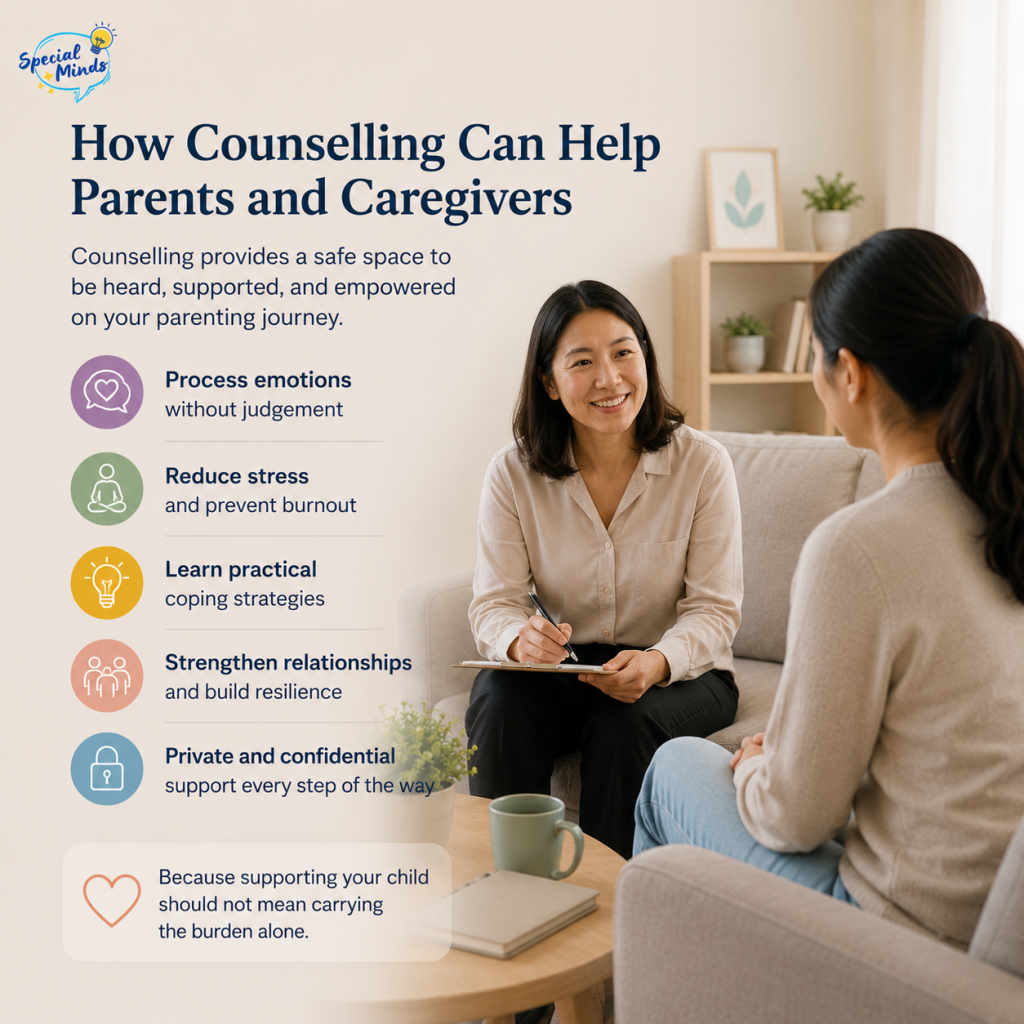
How Counselling Can Help Parents and Caregivers
Counselling is not only for individuals experiencing severe mental health difficulties.
Counselling provides an opportunity for parents to focus on themselves for once.
Not as a caregiver.
Not as an advocate.
Not as a therapist.
Simply as a person.
Counselling Support at Special Minds
At Special Minds, we understand that supporting a child with special needs also means supporting the people who care for them.
Our Special Needs Counsellors provide a safe, supportive, and confidential environment where parents and caregivers can openly discuss their concerns, challenges, and emotions.
Sessions are tailored to the unique experiences of families navigating autism, ADHD, learning differences, developmental delays, and other additional needs.
Whether you are feeling overwhelmed, burnt out, anxious, or simply in need of someone who understands, support is available.
Counselling Fees
Counselling sessions for parents and caregivers are available at:
$120 – $150 per 50-minute session
Fees vary depending on the counsellor’s qualifications, experience, and area of specialisation.
You Do Not Have To Carry Everything Alone
Many parents spend years focusing on everyone else’s well-being while neglecting their own.
Yet one of the most important things a parent can do for their child is to ensure they are also taking care of themselves.
Seeking support is not a sign of weakness.
It is a sign that you recognise your own needs matter too.
If you have been carrying worries, stress, or emotional exhaustion on your own, perhaps it is time to ask yourself the same question we ask so many parents: