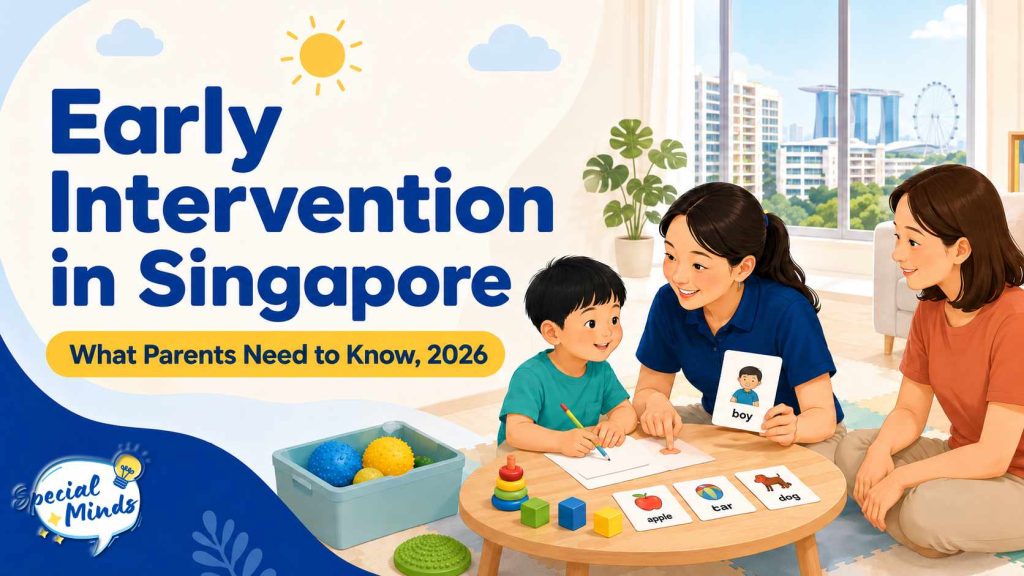
Quick Answer: Early intervention in Singapore is structured 1:1 support for children aged 0 to 6 with developmental delays. Sessions target gross motor, fine motor, speech and language, sensory processing, and self-help skills. Private home-based EI starts quickly, unlike the EIPIC programme, which has a 6 to 18 month waitlist.
Many parents first hear the words “early intervention” from a doctor, a teacher, or another parent in a WhatsApp group. Most are not sure what it means, whether their child qualifies, or how to get started.
This article explains what early intervention in Singapore looks like, why the EIPIC waitlist pushes many families toward private options, and what home-based 1:1 support actually delivers for young children.
What Is Early Intervention?
Early intervention in Singapore is structured, goal-based support for children between 0 and 6 years old who have developmental delays or special needs. The goal is to address delays before they compound, while the brain is at its most adaptable.
Research consistently shows that the first six years of life produce better outcomes than the same support given later. The science behind early intervention covers what the studies actually say.
Early intervention is not just for children with a formal diagnosis. Many families start sessions while waiting for a developmental assessment, or after a teacher flags a concern at preschool.
What Areas Does Early Intervention Cover?
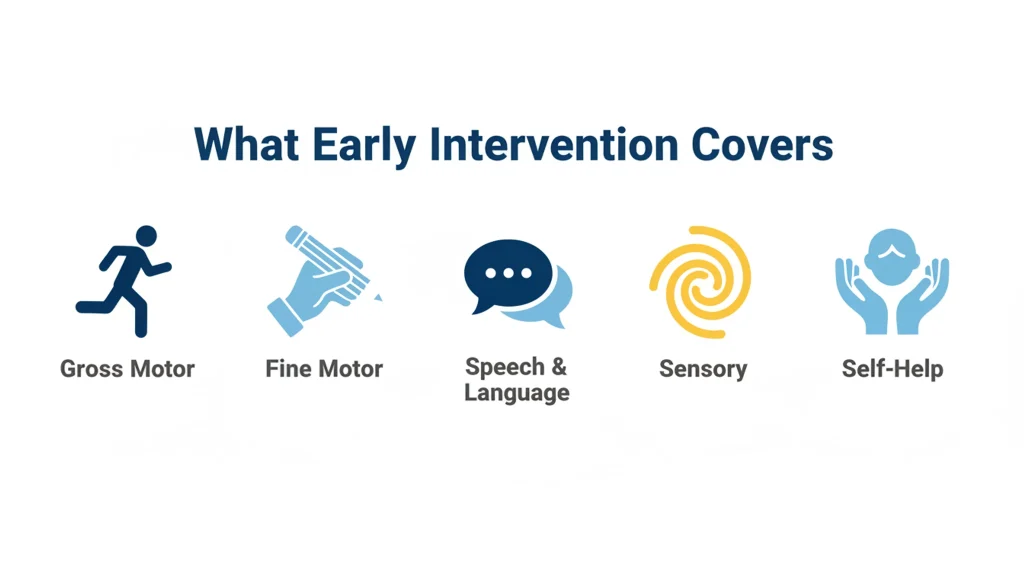
Early intervention in Singapore works across five key developmental areas. Every session is 1:1. Your child works directly with one specialist, not in a group.
1. Gross Motor Skills
Gross motor work focuses on how your child uses the large muscles in their body: balance, coordination, jumping, throwing, and moving through space. A child who struggles to climb stairs, catch a ball, or keep up on the playground is often showing early gross motor delays.
2. Fine Motor Skills
Fine motor development covers the small, precise movements your child needs for daily tasks, including holding a pencil, using scissors, doing up buttons, and building with blocks. These skills directly affect how your child copes in a preschool or primary classroom.
3. Speech and Language
Speech and language support helps your child communicate more clearly. A specialist works on both expressive language (what your child says) and receptive language (what your child understands), covering vocabulary, sentence structure, pronunciation, and following multi-step instructions. Simple speech therapy activities at home can also support progress between sessions.
This is often the first area parents flag, and one of the most responsive to early 1:1 work.
4. Sensory Processing
Some children are hypersensitive or hyposensitive to touch, sound, light, or movement. Sensory work helps your child build tolerance and regulation, so they can sit in a classroom without being overwhelmed, transition between activities without distress, and engage with the world around them more comfortably.
5. Self-Help and Behavioural Skills
This covers the routines your child needs to function independently: dressing, eating, toileting, following instructions, waiting their turn, and managing transitions between activities. A specialist works step by step, building habits that carry into school and home life.
Why Many Singapore Families Choose Private Early Intervention
Singapore has a government-funded option called EIPIC (the Early Intervention Programme for Infants and Children). EIPIC is means-tested and subsidised, which makes it affordable. The problem is the waitlist.
Families regularly wait 6 to 18 months for a placement. During that time, your child’s development does not pause.
The window for early intervention is not indefinite. A child who could have made significant progress between ages 2 and 4 may face steeper challenges by the time they start school if that window goes unused.
Private early intervention fills the gap. It can also be started in parallel with an EIPIC application, so your child receives support while you wait for a subsidised place. Alternatives to EIPIC covers more options if you are currently on the waitlist.
Home-Based Early Intervention: Why It Works for Singapore Families
Most early intervention in Singapore takes place at a centre. Your family travels to the provider, attends the session, and travels back. For working parents with young children, this adds significant time and cost to every appointment.
Special Minds delivers early intervention at home. The specialist comes to you.
Here is what that changes for most families:
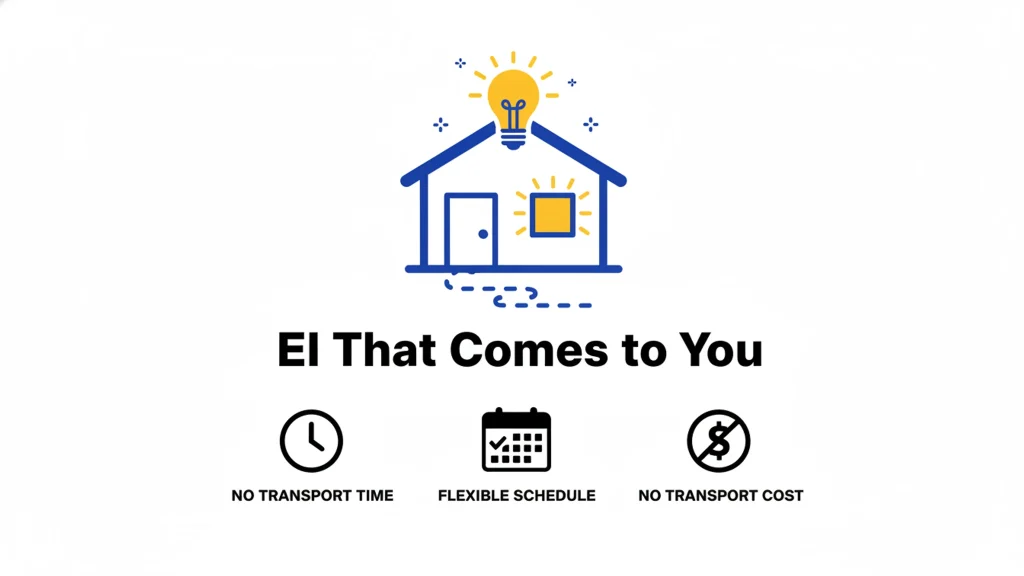
- No transport time. No travel for your child, and no need to leave work early for drop-off and pick-up.
- Your child is comfortable. Young children settle faster and engage more readily in a familiar environment. The specialist is the new element, not the place.
- Sessions fit your schedule. Morning before preschool, after school, or weekends. Home-based sessions are arranged around your week.
- No transport cost. Centre-based EI in Singapore often means a cab or ride-hailing both ways, every session. This adds up fast.
Families also find that home-based sessions are easier to extend at home. When the specialist works in your living room, you see the activities, hear the strategies, and can carry them forward yourself between sessions.
Some families also complement EI support with shadow teacher support in school as their child gets older, creating a connected support plan across home and classroom.
How Special Minds Early Intervention Works
Special Minds matches your child with a specialist trained in the specific areas where your child needs support. Every session is 1:1.
After the first session, your specialist sets a clear plan with short-term targets. You receive progress updates and adjustments as your child develops. There is no locked-in package. You book the sessions that work for your schedule and budget.
If you are currently waiting for EIPIC or a clinic appointment, home-based sessions with Special Minds can bridge the gap and keep your child progressing in the meantime.
Frequently Asked Questions
1. What is early intervention in Singapore?
Early intervention in Singapore is 1:1 structured support for children aged 0 to 6 with developmental delays. Sessions target gross motor, fine motor, speech and language, sensory processing, and self-help skills. Support is delivered by trained specialists and can be home-based or centre-based.
2. What age is early intervention for?
Early intervention is designed for children between 0 and 6 years old. Most families start between ages 2 and 5, often after a flag from a preschool teacher or a paediatric check. The earlier support begins, the more the developmental window can be used.
3. Does my child need a diagnosis before starting?
No. A formal diagnosis is not required to begin early intervention sessions. Many families start while waiting for a developmental assessment. Your specialist will assess your child’s needs directly and build a plan from there.
4. How is private EI different from EIPIC?
EIPIC is a government-funded centre-based programme. It is subsidised but carries a waitlist of 6 to 18 months. Private early intervention, like the sessions offered by Special Minds, starts quickly, is delivered at home, and is tailored 1:1 to your child. Both can run in parallel.
5. How long does early intervention take?
Most children attend sessions for 6 to 24 months, depending on their needs and when they start. Consistent weekly sessions typically show measurable results within 3 to 6 months. Your specialist tracks goals and adjusts the plan as your child progresses.
6. Can I start EI sessions while on the EIPIC waitlist?
Yes. Private home-based EI from Special Minds can run alongside your EIPIC application. Many families use this approach to avoid losing developmental time while waiting for a subsidised place.
7. How much does home-based early intervention cost in Singapore?
Rates depend on the specialist’s background and the number of sessions per week. Contact Special Minds for current pricing. Sessions are billed monthly with no long-term packages.
Starting Early Intervention in Singapore
If your child has been flagged for a developmental delay, or if you have noticed something and are not sure what to do next, early intervention is where most families begin.
The EIPIC waitlist reality means acting early is the single thing that makes the most difference. Special Minds matches families with trained specialists who deliver home-based 1:1 early intervention across Singapore.
Contact Special Minds to find out if home-based early intervention is right for your child.